UEM Solutions: 10 Best Unified Endpoint Management (UEM) Software in 2026
Managing laptops, desktops, smartphones, tablets, and other endpoints across multiple operating systems can become increasingly complex as organizations adopt hybrid work, BYOD, cloud applications, and distributed IT environments.
Unified Endpoint Management (UEM) helps organizations simplify this complexity by bringing endpoint management, configuration, application deployment, security policies, compliance, and lifecycle management into a centralized platform.
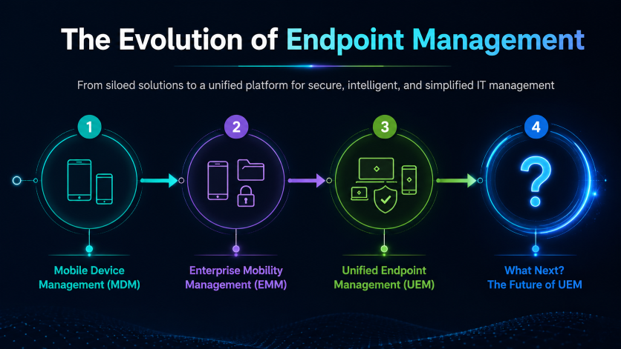
Unlike traditional Mobile Device Management (MDM), which primarily focuses on mobile devices, UEM extends management across a broader range of endpoints, applications, policies, and security controls.
This blog explores 10 UEM software solutions worth considering in 2026, their key capabilities, and the types of organizations they may be best suited for.
What Is Unified Endpoint Management (UEM) Software?
Unified Endpoint Management (UEM) software gives IT teams a single platform to manage and secure an organization’s endpoint environment. Instead of relying on separate tools for PCs, mobile devices, tablets, and other endpoints, UEM brings device administration, security, applications, compliance, and lifecycle management into one centralized solution.
Unified Endpoint Management (UEM) platforms can support multiple operating systems, including Windows, macOS, iOS, Android, Linux, and ChromeOS, helping organizations maintain consistent security and management policies across their entire device ecosystem.
Key capabilities of UEM software include:
- Centralized endpoint management: View, configure, monitor, and manage different types of devices from one console.
- Security and compliance: Apply security policies, enforce compliance requirements, manage updates, and respond to device risks.
- Application management: Deploy, update, and control applications across managed endpoints.
- Device provisioning: Simplify device enrollment, configuration, and onboarding for employees and corporate devices.
- Remote management: Troubleshoot devices remotely, lock or wipe compromised endpoints, and perform administrative actions without physical access.
- Flexible device management: Support use cases such as BYOD, corporate-owned devices, shared devices, and kiosk deployments.
Why is UEM Important?
UEM Solution helps organizations create a more consistent and manageable endpoint environment while reducing the complexity of using multiple management tools.
- One platform, multiple endpoints: Manage diverse devices and operating systems from a unified interface.
- Stronger security posture: Apply consistent policies and ensure devices meet organizational security requirements.
- Simplified IT operations: Automate repetitive tasks such as enrollment, configuration, application deployment, and updates.
- Complete device lifecycle management: Manage endpoints from initial provisioning through ongoing maintenance and retirement.
- Better support for hybrid work: Securely manage devices used by employees regardless of where they work.
- Improved access control: Combine device compliance and security policies to help ensure that only trusted and compliant endpoints access business resources.
How We Selected the Best UEM Solutions
The platforms included in this list are considered based on factors such as multi-OS support, device management capabilities, security and compliance, application management, provisioning, remote management, automation, scalability, integration capabilities, and suitability for different organization sizes.
10 Best Unified Endpoint Management Software in 2026
The right UEM solution depends on an organization’s endpoint landscape, operating systems, security requirements, and IT priorities. For organizations in India, selecting a UEM platform involves many of the same considerations as organizations globally, including operating-system coverage, security, scalability, BYOD support, integrations, and total cost of ownership. Organizations may also want to evaluate local support availability, implementation expertise, licensing options, and regulatory requirements when selecting a UEM platform.
Here are 10 UEM platforms worth considering:
1. halofort :
halofort Unified Endpoint Management Xtended (UEMX) Platform takes a modern approach to endpoint management by combining UEM with identity, access control, Conditional Access, and Zero Trust security.
The UEMX platform is designed to help organizations manage diverse endpoints while applying policies based on users, devices, compliance, and access requirements.
Key capabilities:
- BYOD Management
• Multi-OS endpoint management - Device provisioning and lifecycle management
- Application management
- Patch management
- Policy and compliance management
- Conditional Access
- Identity-aware security
- Remote device actions
- Zero Trust Network Access
- Automation
Why choose halofort?
For organizations looking beyond traditional device management, the halofort UEMX platform brings device management, endpoint management, identity, security, access control, and Zero Trust capabilities together through a unified approach.
2. Microsoft Intune
Microsoft Intune provides cloud-based endpoint management and security for organizations using Windows, macOS, iOS, Android, and Linux devices. It enables IT teams to manage devices and applications while using Microsoft Entra ID to enforce access based on device compliance.
The platform also integrates with Microsoft’s broader management ecosystem, including Configuration Manager for on-premises Windows environments and separate add-ons that provide capabilities such as privilege management, endpoint analytics, remote assistance, and certificate management.
Best Suited for organizations with significant investments in Microsoft 365, Microsoft Entra, Windows, and the wider Microsoft security ecosystem.
3. IBM MaaS 360
IBM MaaS360 is a SaaS-based UEM platform that centrally manages smartphones, tablets, laptops, desktops, IoT, and specialized devices. It combines device management with security, analytics, identity, and AI-powered risk insights.
MaaS360 supports iOS, iPadOS, macOS, Android, Windows, and ChromeOS, while also integrating with existing endpoint management tools to support a gradual move toward modern unified management.
Best suited for organizations looking for enterprise mobility management combined with security, analytics, identity, and endpoint management capabilities. Organizations should evaluate supported device types, integrations, security requirements, and licensing based on their endpoint environment.
4. Ivanti
Ivanti Neurons is a cloud-based platform for discovering, managing, and securing endpoints from a central console. It uses AI-driven automation to identify and resolve device issues while supporting a smoother user experience.
Key capabilities include real-time asset discovery, self-healing, and natural language processing for faster operational insights.
5. Omnissa
Omnissa Workspace ONE UEM, formerly part of VMware, is a cloud-native UEM platform that centrally manages desktops, mobile, rugged, server, and specialized devices across major operating systems, including Windows, macOS, iOS, Android, Linux, and ChromeOS.
It combines automation, multi-tenant management, and application lifecycle management with security features such as conditional access, compliance policies, and per-app VPN, while integrating with other Omnissa solutions.
6. Hexnode
Hexnode UEM helps manage smartphones, tablets, and laptops by simplifying device setup, enabling real-time monitoring, and supporting security controls such as app restrictions and geofencing. It is well suited for small businesses and budget-conscious teams and its pricing is based on the number of managed devices.
7. JamfPro
Jamf Pro is an endpoint management platform primarily designed for Apple devices, including macOS, iOS, iPadOS, and tvOS. It helps IT teams automate device deployment, simplify configurations, manage applications, and maintain security across Apple environments.
Things to consider include its strong focus on Apple environments and the need for additional tools for broader multi-platform management.
8. SureMDM
SureMDM is a centralized device management platform that helps organizations enroll, monitor, secure, and manage Android, iOS, macOS, Windows, Linux, and Wear OS devices. It supports corporate-owned and BYOD environments with capabilities such as zero-touch enrollment, application and kiosk management, remote troubleshooting, compliance controls, and remote wipe.
9. HCL BigFix
HCL BigFix is an endpoint management and security platform designed for organizations that need centralized visibility, configuration, patching, and remediation across large and diverse endpoint environments.
Organizations should evaluate BigFix against their specific UEM requirements, particularly around mobile-device management, cloud deployment preferences, identity integration, user experience, and the depth of management required across different endpoint types.
10. ManageEngine Endpoint Central
ManageEngine Endpoint Central provides IT teams with a centralized way to manage and secure their entire endpoint environment. It supports desktops, laptops, servers, mobile devices, and browsers, allowing organizations to handle device configuration, security policies, software deployment, remote support, and endpoint monitoring through a unified platform. This helps simplify day-to-day IT operations, improve visibility, and maintain secure and reliable business environments.
Conclusion
The UEM landscape has evolved beyond traditional device management, helping organizations manage diverse endpoints, automate IT operations, improve compliance, strengthen security, and support hybrid work.
There is no one-size-fits-all UEM solution. The right choice depends on your endpoint environment, operating systems, security needs, BYOD strategy, integrations, scalability, and budget. Organizations should also consider application and patch management, automation, identity integration, Conditional Access, compliance, and Zero Trust capabilities.
For organizations looking to unify endpoint management, identity, access control, and Zero Trust security, the halofort Unified Endpoint Management Xtended (UEMX) platform provides a unified approach to simplify management and strengthen security.
Before selecting a UEM platform, assess your current environment and requirements, and choose a solution that can scale with your organization’s needs.